

























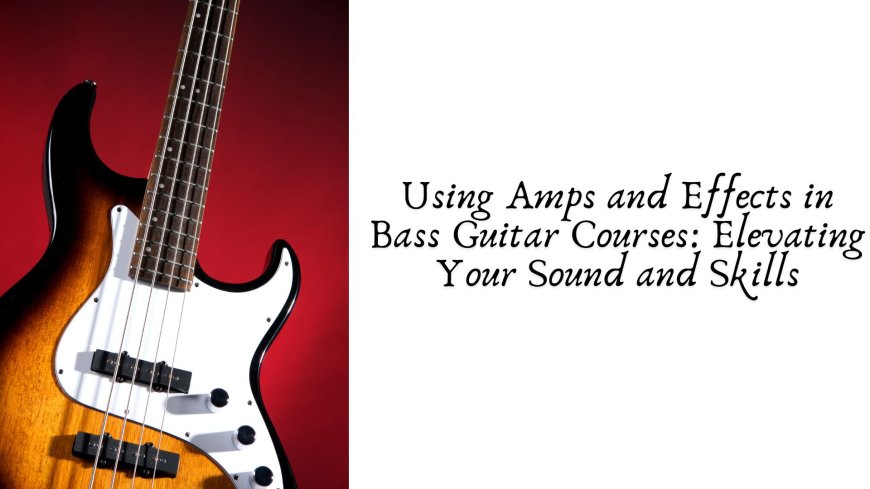
Using Amps and Effects in Bass Guitar Courses: Elevating Your Sound and Skills
Amps and effects are not just accessories—they are essential tools that empower bassists to find their voice and thrive in diverse musical settings

When it comes to learning the bass guitar, most beginners start with mastering finger techniques, rhythm, and music theory. While these foundational elements are essential, integrating amplifiers (amps) and effects into bass guitar courses can significantly enhance your playing experience and elevate your sound to professional levels. Understanding how to use these tools properly adds a dynamic dimension to your music and prepares you for live performances, studio work, and creative exploration. This article delves into how amps and effects are used in bass guitar courses and why they matter.
The Role of Amps in Bass Guitar Learning
Understanding Amplifier Basics
In any bass guitar course, one of the earliest lessons on equipment includes the use of an amplifier. Unlike guitars, bass frequencies need specific amp designs to reproduce low-end tones without distortion. Learning about different types of ampssuch as solid-state, tube, and hybridgives students insights into how each impacts tone and volume.
Solid-State Amps are reliable and often used in practice settings due to their clarity and affordability.
Tube Amps offer a warmer, vintage tone but are typically more expensive and heavier.
Hybrid Amps combine the best of both worlds and are becoming increasingly popular in bass communities.
Dialing in the Right Tone
A significant part of amp training involves EQ (equalization) settings. Students are taught how to adjust bass, mids, and treble frequencies to shape their sound for different music styles. Whether playing funk, jazz, rock, or metal, knowing how to tweak your amp settings is crucial to achieving the desired tone.
Amp Etiquette for Performances and Jamming
Courses also focus on practical aspects such as volume control, gain staging, and avoiding feedback. These lessons are vital when preparing students for real-world scenarios, including band rehearsals and stage performances.
The Power of Effects in Bass Guitar Courses
Introduction to Bass Effects Pedals
Many bass courses introduce effects pedals to help players explore sonic textures. While guitarists often use a wide range of effects, bassists tend to be selective, focusing on pedals that enhance tone without muddying the low end. Common effects taught in courses include:
-
Compression smooths out dynamic range and adds punch.
-
Overdrive/Distortion adds grit for rock, punk, or metal tones.
-
Chorus creates a rich, layered effect often used in pop and funk.
-
Envelope Filter/Wah great for funk and groove-based playing.
-
Octaver adds sub-bass or high-octave tones to your sound.
Signal Chain and Pedalboard Setup
An essential part of any bass guitar course involving effects is learning how to build a signal chain. Instructors teach students how to arrange pedals for optimal sound quality and minimal noise. They also explore power supply management, cable placement, and pedalboard organization.
Creative Application of Effects
Courses don't just stop at technical know-how; they also encourage students to explore their creativity. By combining effects in new ways, bassists can develop unique soundscapes that fit modern genres like ambient, electronic, and progressive music. Group exercises often include improvisation sessions where students experiment with different effects in a live context.
Benefits of Using Amps and Effects in Bass Guitar Education
Real-World Preparedness
Many bassists aim to perform live or record music professionally. Understanding how to use amps and effects prepares students for different environments, including gigs, studio sessions, and jam nights. It bridges the gap between classroom learning and real-world application.
Tone Personalization
Just like a guitarist or vocalist, a bassist's tone is a signature part of their musical identity. Through amps and effects, students learn to craft a personalized sound that sets them apart in any ensemble.
Enhanced Musical Expression
By using effects creatively, students can add emotion, depth, and flair to their playing. Whether it's a subtle chorus during a ballad or aggressive distortion in a metal breakdown, effects can dramatically elevate musical expression.
What to Look for in a Bass Guitar Course with Amps and Effects
When choosing a course that covers amps and effects, ensure it includes:
-
Hands-on practice with a variety of amps and pedals.
-
Instructors experienced in live sound and gear management.
-
Structured modules on tone shaping, signal flow, and gear maintenance.
-
Performance opportunities to apply effects in musical contexts.
Online bass guitar programs often include gear demonstration videos, interactive exercises, and downloadable tone presets, while in-person classes may offer group jam sessions and one-on-one tone coaching.
Conclusion
Amps and effects are not just accessoriesthey are essential tools that empower bassists to find their voice and thrive in diverse musical settings. By incorporating these elements into bass guitar courses, learners gain a deeper understanding of tone, technique, and performance. Whether you're a beginner discovering your first chorus pedal or an intermediate player fine-tuning your amp settings, mastering these tools opens up a world of musical possibilities. So, plug in, experiment, and let your bass sound speak volumes.