

























Understanding Call Options: A Beginner's Guide
Among the financial instruments available to investors, risk management and profit maximization are offered by futures and options, which will be dealt with extensively with respect to speculation and hedging.

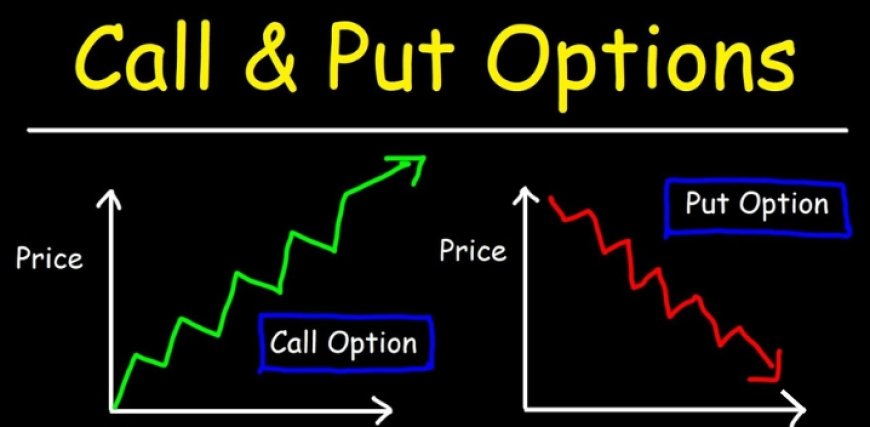
Among the financial instruments available to investors, risk management and profit maximization are offered by futures and options, which will be dealt with extensively with respect to speculation and hedging. These are of 2 types i.e.Call Option and Put Options
What Is a Call Option?
Call options are derivative contracts that bestow upon the buyer the right, but not the obligation, to purchase an underlying asset at a previously specified price, that is, the strike price, by a certain expiration date. The buyer pays a premium to the seller (the writer) for this right.
What Is a Put Option?
A put option is also the opposite of a call option. A put option gives the buyer the right but not the obligation to sell the underlying asset at the strike price before or on the expiration date. Investors take this kind of option when they expect the price of the asset to fall.
Futures and Options: Main Differences
Futures and options are two forms of derivatives that differ in function. The latter is an agreement between two parties to buy and sell an asset at a specific date and a specific price in the future. Unlike the options contract, futures contracts compel both parties at the expiration of the contract. No party has the option to walk away.
Options are the opposite, whereby the buyer receives the right but not the obligation to purchase (call) or sell (put) an asset. Because of this flexibility, options suit a variety of scenarios, especially in uncertain market conditions.
Reasons for Buying a Call Option
Investors rely on a call option for various reasons.
- Speculation: Buying a call option allows an investor to benefit from an expected rise in the price of an asset without having to own it outright, with the only forfeit being the premium, which is probably less than the capital needed to buy the actual asset.
- Leverage: Call options grant scope for price movement with a small upfront investment. If the market moves in favor of the option holder, gains can be compared to owning the underlying asset, directly magnified.
- Hedging: Certain investors consider call options as a means of hedging in case their respective assets are subject to purchase in the future. For example, the use of call options could cluster around the ceiling of a price, considering a company in the prospect of purchasing a commodity.
Risks Involved in Call Options
Nonetheless, call options provide limited downside to buyers. The premium paid is irrecoverable, and unless the price of the underlying asset exceeds the strike price, the option may expire worthless. For the seller (or writer) of the call option, the risk potentially grows, especially as the price of the asset increases significantly.
Comparing Call and Put Options
Both call and put options serve as collateral for a contract that draws its value from an underlying asset. The primary difference between the options lies in how they utilize rising or falling prices as their stance. For instance, a call option gains in value as prices increase; conversely, a put option gains in value when prices fall. Traders combine these contracts in all sorts of ways to craft strategies that match their interpretations of the market, risk tolerance, and investment objectives.
Thus, in a broader view of futures and options, these constructs help manage price risk across a broad spectrum of commodities, currencies, stocks, indices, and other assets. Institutions, traders, and even businesses hedge against adverse price movements using these tools or speculate on future price movements.
For instance, a farmer could initiate an option contract on the commodity markets for crops in anticipation of declining prices, whereas a food manufacturer might execute a call option to lock in a rate for the purchase of ingredients. Similarly, in the equity markets, traders might construct option strategies around company earnings announcements or announcements of economic data.
Conclusion
Understanding a call option is the first step for entering into the world of futures and options. These instruments provide flexibility to investors, and investors can customize their strategies based on their expectations and risk tolerance. Speculating on price increases with a call option or protecting from downtrends with a put option requires a solid understanding of how these tools function to make informed choices.