


























PE Ratio Meaning and Its Role in Investment Decision-Making
Learn what PE ratio means and how it impacts equity mutual fund investments in India. Make smarter investment choices with this essential financial metric.

If youve ever looked at stock or mutual fund research reports, youve probably come across the PE ratio. While often used in equity analysis, it also influences broader investment decisionsincluding mutual fund strategies. Understanding the PE ratio meaning can help Indian investors make more informed decisions, especially when selecting equity-based mutual fund schemes.
In this article, we explain what the PE ratio is, how it works, how it affects valuations, and how it can be used alongside tools like an SIP top up calculator to improve your overall investment planning.
What is the PE ratio meaning?
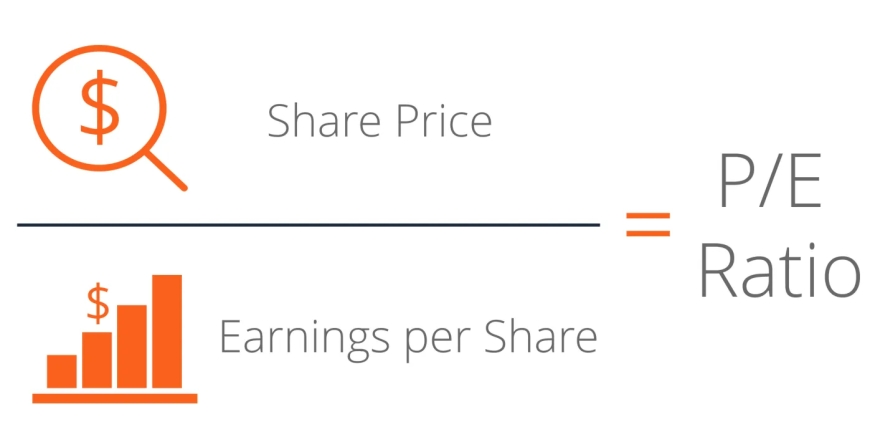
The PE ratio refers to the price-to-earnings ratio, a commonly used metric to evaluate whether a stock or index is trading at a reasonable valuation. It is calculated as:
PE ratio = Market price per share Earnings per share (EPS)
In mutual fund analysis, the PE ratio is often applied to the underlying index or portfolio. For example, if an index has a PE ratio of 25, it means investors are willing to pay Rs. 25 for every rupee of earnings generated by companies in that index.
Why is the PE ratio important?
The PE ratio gives insight into how expensive or cheap a stock or portfolio might be, based on its current earnings. While it doesnt predict future performance, it can help investors assess valuation risk.
Heres how to interpret it:
-
Higher PE ratio: May suggest that stocks are relatively expensive or that potentially higher earnings growth is expected
-
Lower PE ratio: May indicate undervaluation or potentially lower expected growth
However, a high PE does not automatically mean overvalued, and a low PE does not always mean cheap. The PE ratio must be evaluated in the context of the industry, growth prospects, and historical averages. Please remember that any historical information or past data should not be taken as an indication or guarantee of any future performance
How PE ratio is used in mutual fund investing
When analysing equity mutual funds, especially index funds or large-cap strategies, fund managers and investors often consider the PE ratio of the portfolio or benchmark index.
For example:
-
A fund benchmarked to Nifty 50 may track the indexs PE ratio to assess whether the market is trading at a premium or discount
-
Some investors adjust their equity exposure based on index PE levels, allocating more during periods of low PE and reducing exposure when valuations are high
That said, PE should not be used in isolation. Investors should also consider potential earnings growth, debt levels, sector allocation, and macroeconomic conditions.
What is an SIP top up calculator and how does it help?
An SIP top up calculator is a tool that helps you estimate the future value of your SIP investments when you increase the contribution at regular intervals.
For instance, you may start with Rs. 5,000 per month and decide to increase the SIP amount by 10% annually. The calculator will show you how this impacts the final corpus over time.
By combining insights from PE ratio analysis and using an SIP top up calculator, investors can plan their contributions more strategically and estimate the potential growth of their investments.
Limitations of using the PE ratio
While the PE ratio is a helpful indicator, it has limitations:
-
It does not account for future earnings growth potential or company-specific factors
-
It may be distorted in sectors with cyclical or volatile earnings
-
It is not suitable for comparing companies across different industries
-
For mutual funds, portfolio-level PE does not account for fund management style or turnover
Hence, PE should be one of several metrics used during decision-making.
When is the PE ratio most useful?
PE ratio analysis may be useful in the following situations:
-
Long-term investing: Helps assess whether markets are currently overvalued or undervalued relative to long-term averages
-
Asset allocation: Can inform shifts between equity and debt based on valuation signals
-
Fund comparison: Provides a view of how expensive a funds portfolio is relative to others in the same category
Still, decisions should never be based on PE ratio alone. Always review fund objectives, asset allocation, consistency of historical returns, and suitability for your risk profile.
Final thoughts
Understanding the PE ratio meaning is a valuable part of mutual fund and equity investing. It gives you a glimpse into how the market values current earnings and helps identify periods of relative overvaluation or undervaluation. When combined with planning tools like an SIP top up calculator, it allows investors to stay disciplined and optimise their contribution strategies.
However, investors should use the PE ratio carefully, and always consider it in context. Whether you are investing through SIPs, top-ups, or lump sum methods, make sure your decisions align with your financial goals and risk tolerance. If you are unsure about how to apply PE analysis to your investments or how to structure your SIP strategy, it is advisable to consult with a financial planner or investment advisor before investing.
Mutual Fund investments are subject to market risks, read all scheme related documents carefully.